Public Resources
What makes a carbohydrate food “healthy,” how experts and consumers each judge it, and the gaps between them.
A running list of our public-facing work on what makes a food “healthy” — and who gets to decide. It spans how expert rating systems score carbohydrate foods, how everyday consumers actually judge them, and the gaps between the two — the educational and communication priorities that follow. The IAFNS Carbohydrate Quality series, the peer-reviewed papers behind it, and the press coverage that followed, all open to watch or read.
Interactive Tool
IAFNS Webinars
The IAFNS Carbohydrates Committee series opens with a consumer-research lead-in from NORC — how everyday Americans judge carbohydrate foods — followed by three webinars I presented on how expert rating systems score the same foods, and where experts and consumers pull apart.
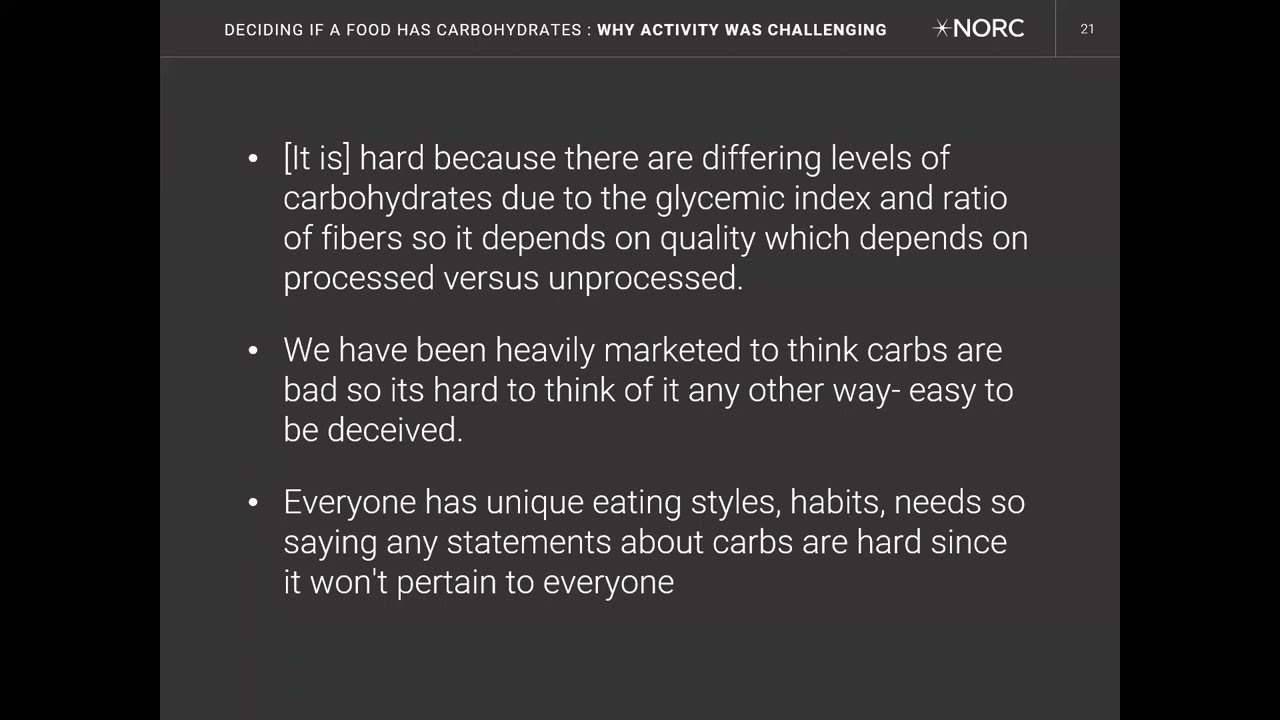
Carbohydrate-Quality Beliefs & Behaviors
NORC’s consumer research: what everyday Americans believe makes a carbohydrate food healthy — and why it’s so hard to judge.
Watch on YouTube →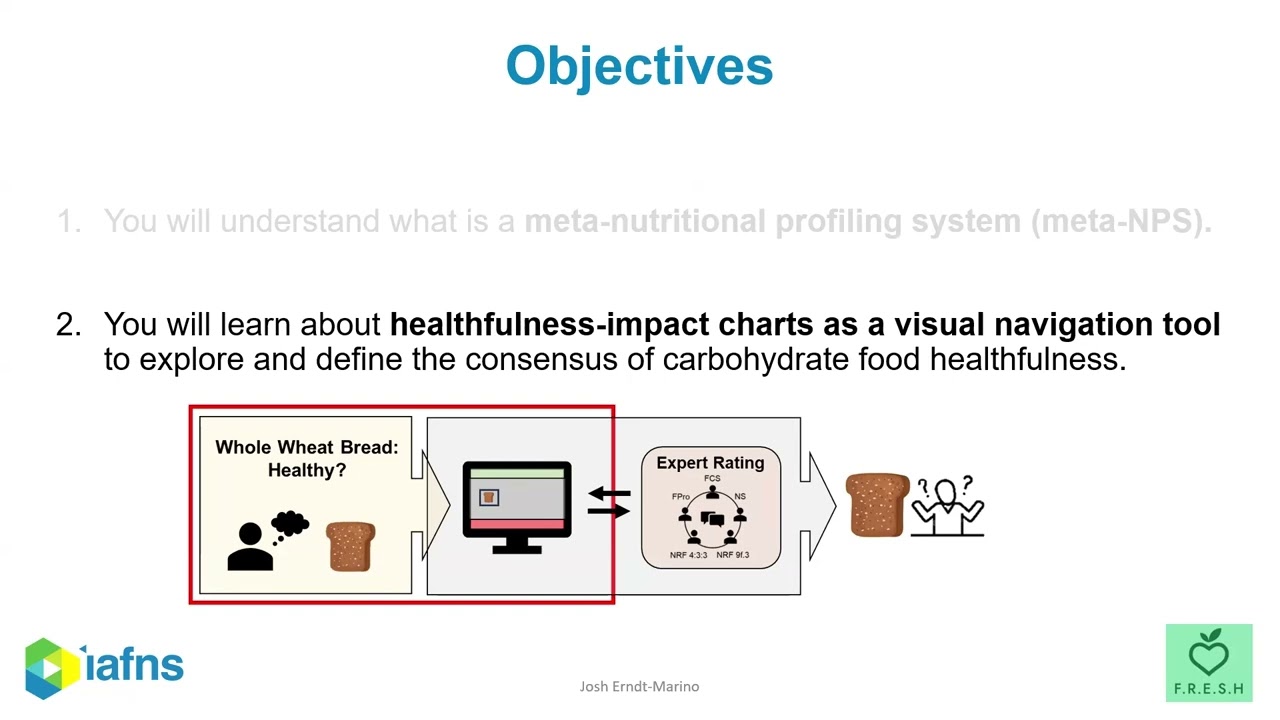
A Tool to Compare How Experts Rate Carbohydrate Foods
A meta–nutrient-profiling tool for seeing how different expert systems score the same carbohydrate foods.
Watch on YouTube →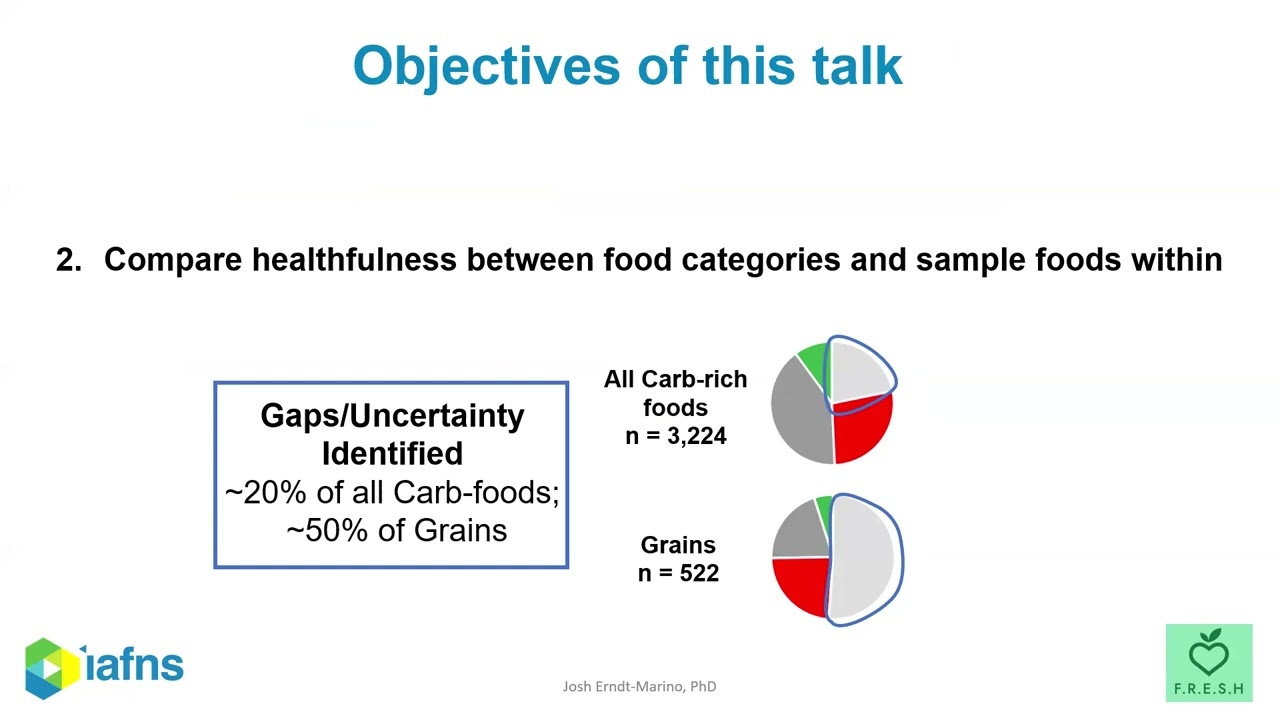
Insights from the Tool Comparing Rating Systems
Where expert systems agree, disagree, and leave gaps — roughly 20% of carbohydrate foods, and half of grains, sit in uncertainty.
Watch on YouTube →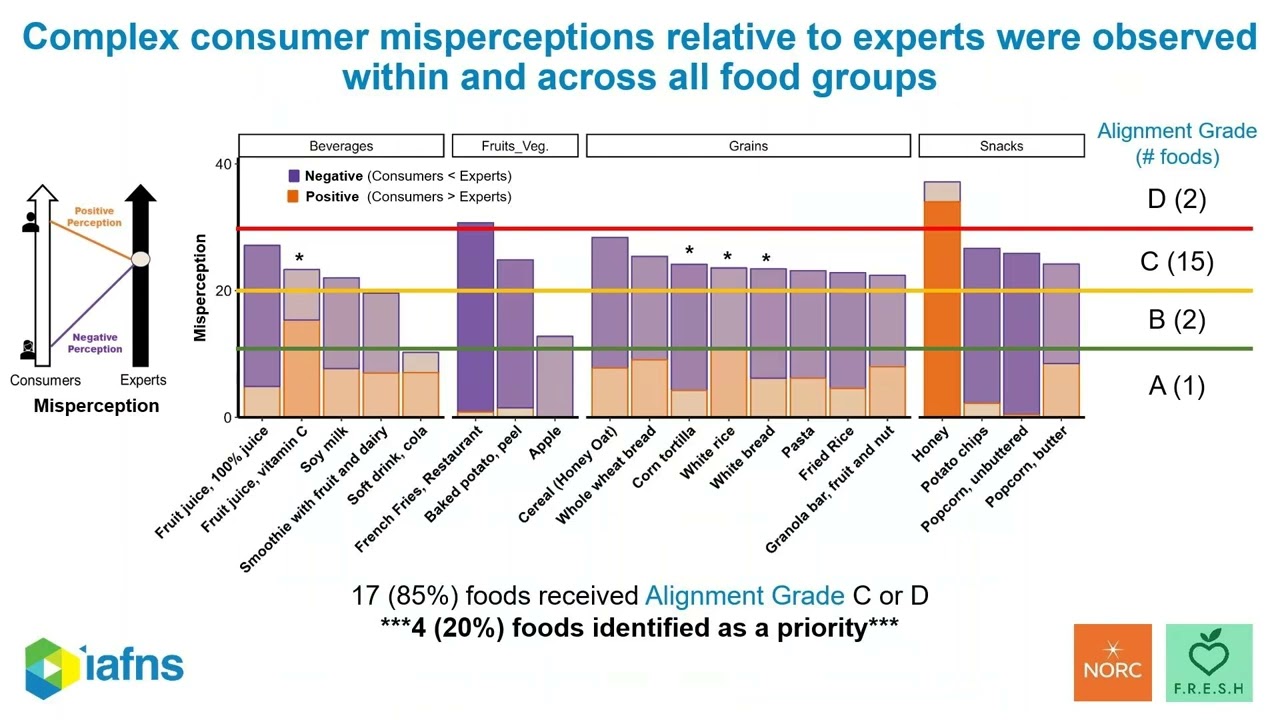
Alignment Between Experts and Consumers
Consumer perceptions set against expert ratings: 85% of foods land an alignment grade of C or D, and four are flagged as priorities.
Watch on YouTube →
The Institute for the Advancement of Food and Nutrition Sciences convened the Carbohydrates Committee behind this series.

NORC at the University of Chicago led the consumer focus-group research that opens the series with the public’s own view of carbohydrate healthfulness.
Published Papers
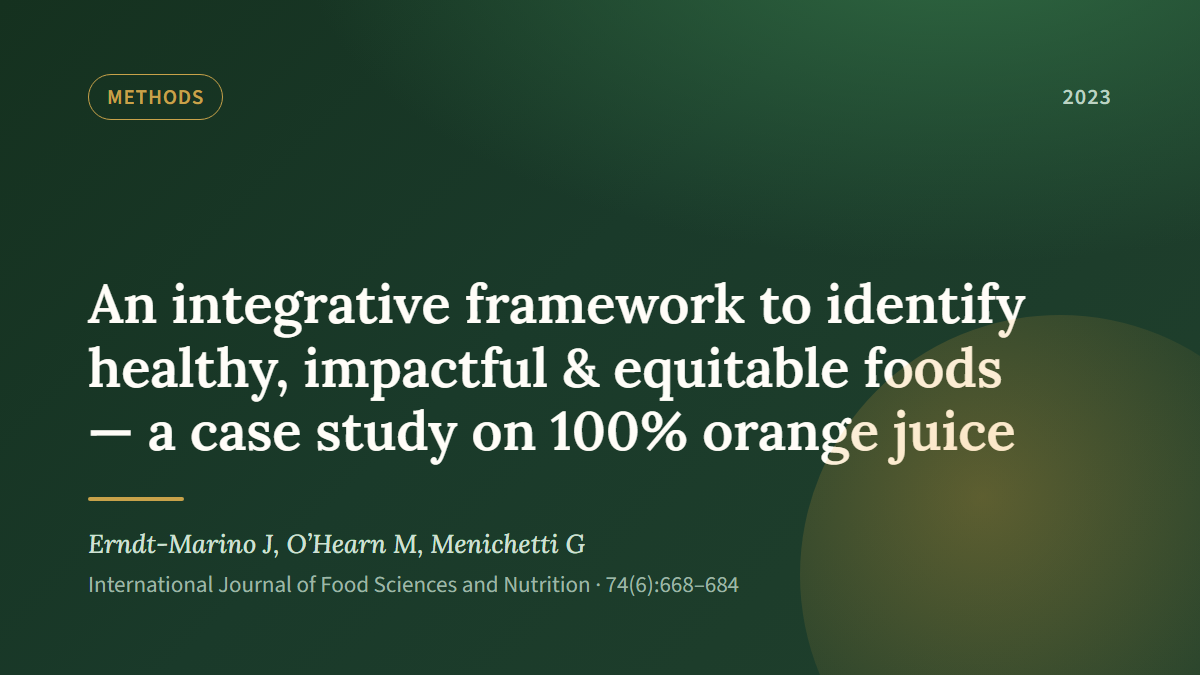
The integrative food framework
A meta-framework that pools six nutrient-profiling systems to find foods that are healthy, impactful, and equitable — demonstrated on 100% orange juice.
Read the paper →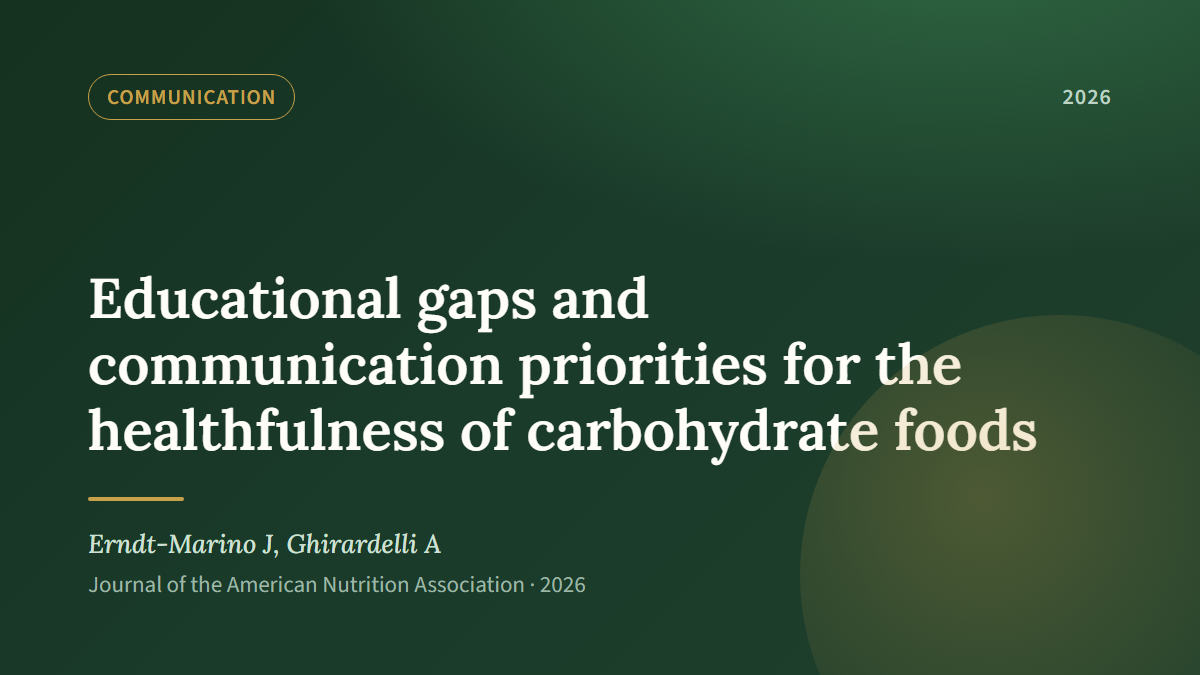
Educational gaps in carbohydrate healthfulness
Where public understanding of carbohydrate healthfulness breaks down — and the communication priorities that follow.
Read the paper →In the News
Press coverage of the Educational gaps paper, from the IAFNS announcement to national food media.
Most People Still Get Carbs Wrong, According to a New Study
National food-media pickup: which carbohydrate foods the public undervalues, and why the confusion persists.
Nutritional Outlook · Jul 2026New Belief-Mapping Study Reveals Disconnect Between Consumer Perceptions and Expert Consensus on Carbohydrate Foods
Industry trade coverage of the belief-mapping approach and the consumer–expert disconnect it surfaces.
Potato Business · Jul 14, 2026Consumers See Potato Foods as Less Healthy Than Nutrition Experts, Study Says
Sector coverage of one headline finding: potato foods sit among the most negatively misperceived.
Where the Food Comes From · Jul 7, 2026Consumers View the Healthfulness of Carbohydrate Foods Differently Than Experts
Coverage of the core result: 85% of the 20 foods tested draw a low consumer-to-expert alignment grade.
Newswise · IAFNS announcement · Jul 6, 2026Consumers View the Healthfulness of Carbohydrate Foods Differently than Experts
The IAFNS release that opened the coverage cycle, with the study's key numbers and priority foods.
Food & Wine also shared the story with its audience on Facebook →
Comments